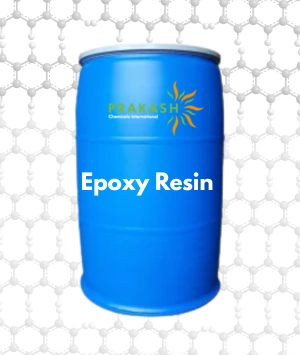




Epoxy Resin (EPOMAX)
- HS Code: 39073010
- CAS NO. : 25068-38-6

- General Description
- Chemical Properties
- Technical Specification
- Applications
- Compliance and Certifications
- Packaging Details
- Key Features/Benefits
- Storage and Handling
General Description
Epoxy Resin is a high-performance thermosetting polymer widely used in coatings, adhesives, composites, electrical insulation, and construction applications. It is produced through the reaction of epichlorohydrin with bisphenol A or other phenolic compounds, resulting in a resin system known for its exceptional adhesion, mechanical strength, and chemical resistance.
Epoxy Resins offer excellent bonding to metals, concrete, wood, and composites, along with low shrinkage during curing and strong resistance to moisture, solvents, and corrosive environments. Their versatility allows formulation across a wide range of viscosities and curing systems, making them suitable for both industrial and specialty applications.
Chemical Properties
• Low viscosity (10,000-20,000 cPs at 25°C),
• epoxy equivalent weight 180-195,
• Excellent chemical and abrasion resistance post-cure.
Technical Specification
• Epoxy Value: As per grade specification
• Viscosity (25°C): Grade dependent
• Molecular Weight: Varies by resin type
• Cure Systems: Amine, anhydride, and polyamide compatible
Applications
Protective Coatings: Used in industrial, marine, and anticorrosive coatings for metal and concrete protection.
Adhesives and Sealants: Used for high-strength bonding applications in construction, automotive, and electronics.
Electrical and Electronics: Used for insulation, potting compounds, and encapsulation of electrical components.
Composites: Used as a matrix resin in fiberglass, carbon fiber, and reinforced plastic systems.
Construction and Flooring: Used in epoxy flooring systems, grouts, and structural repair formulations.
Compliance and Certifications
NA
Packaging Details
IBCs and Drums
Key Features/Benefits
• Excellent adhesion to multiple substrates
• High mechanical strength and durability
• Strong chemical and moisture resistance
• Versatile formulation and curing options
Storage and Handling
• Store in a cool, dry place away from direct sunlight
• Keep containers tightly closed
• Avoid prolonged exposure to heat
• Use appropriate PPE during handling